
Scientific Papers
Emulating the one-dimensional Fermi-Hubbard model by a double chain of qubits
Authors: Jan-Michael Reiner, Michael Marthaler, Jochen Braumüller, Martin Weides, Gerd Schön
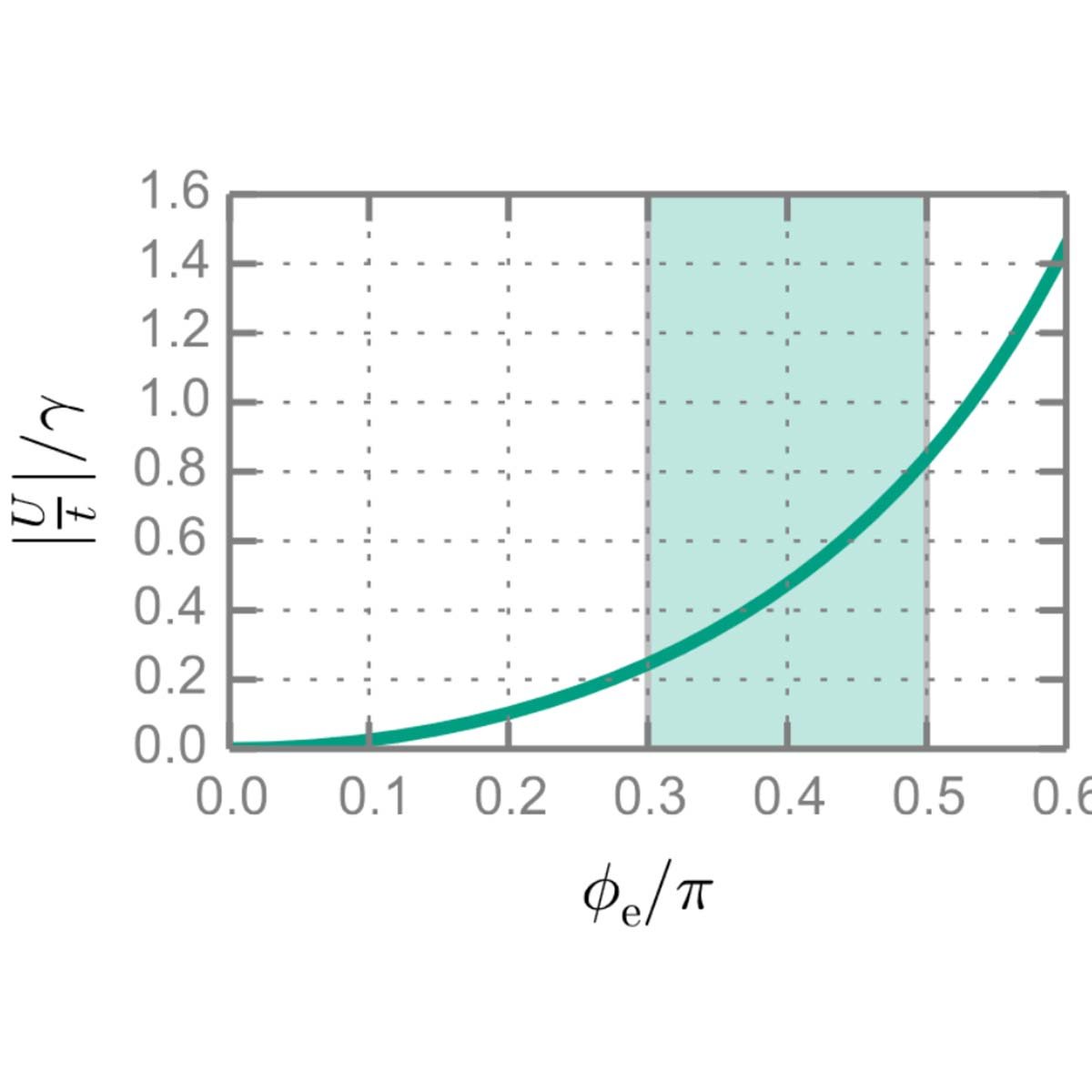
The Jordan-Wigner transformation maps a one-dimensional spin-1/2 system onto a fermionic model without spin degree of freedom. A double chain of quantum bits with XX and ZZ couplings of neighboring qubits along and between the chains, respectively, can be mapped on a spin-full 1D Fermi-Hubbard model. The qubit system can thus be used to emulate the quantum properties of this model. We analyze physical implementations of such analog quantum simulators, including one based on transmon qubits, where the ZZ interaction arises due to an inductive coupling and the XX interaction due to a capacitive interaction. We propose protocols to gain confidence in the results of the simulation through measurements of local operators.
Decoherence and Decay of Two-level Systems due to Non-equilibrium Quasiparticles
Authors: Sebastian Zanker, Michael Marthaler, Gerd Schön
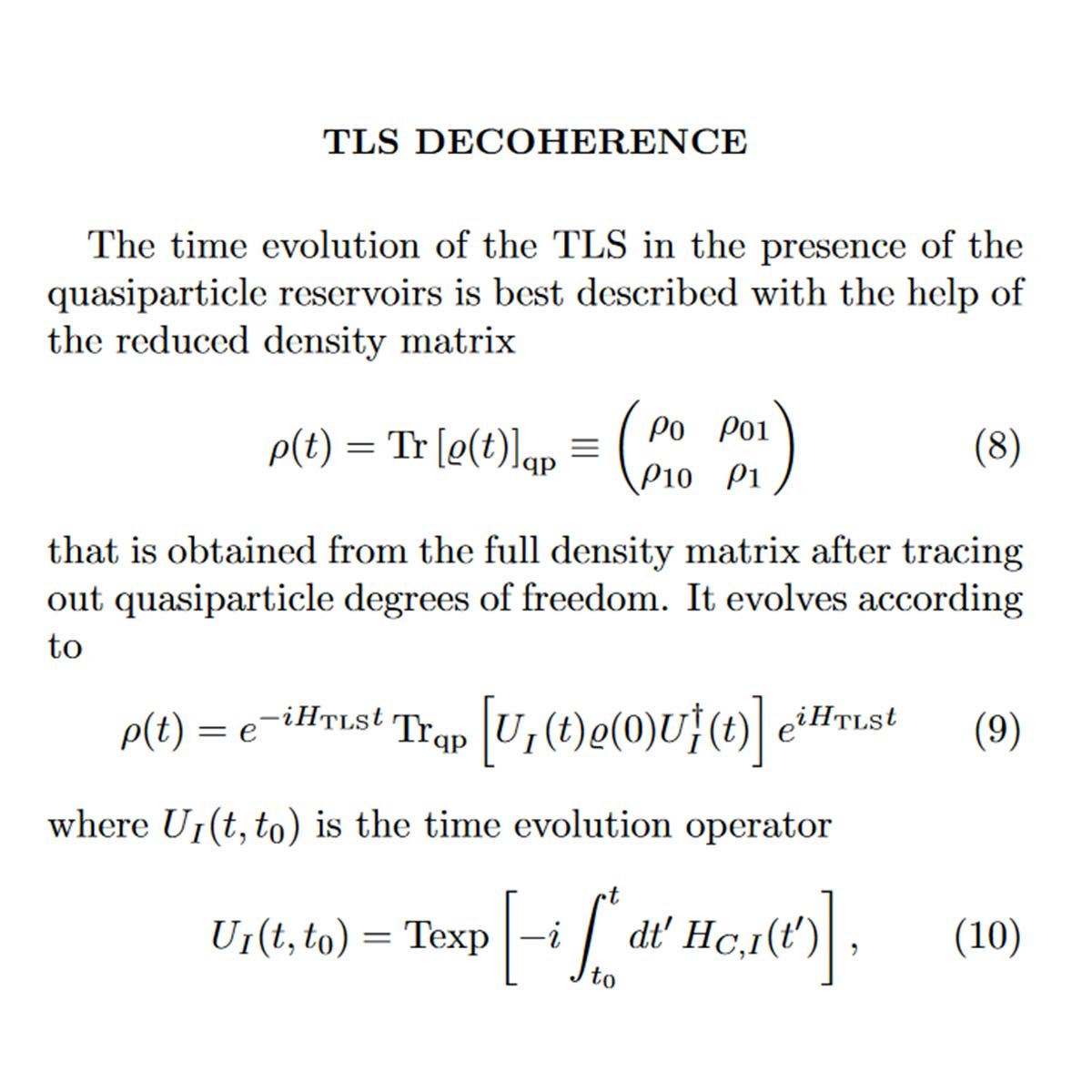
It is frequently observed that even at very low temperatures the number of quasiparticles in superconducting materials is higher than predicted by standard BCS-theory. These quasiparticles can interact with two-level systems, such as superconducting qubits or two-level systems (TLS) in the amorphous oxide layer of a Josephson junction. This interaction leads to decay and decoherence of the TLS, with specific results, such as the time dependence, depending on the distribution of quasiparticles and the form of the interaction. We study the resulting decay laws for different experimentally relevant protocols.
Distortion of a reduced equilibrium density matrix: influence on quantum emulation
Authors: Iris Schwenk, Michael Marthaler
Journal reference: Phys. Rev. B 93, 014305 (2016)
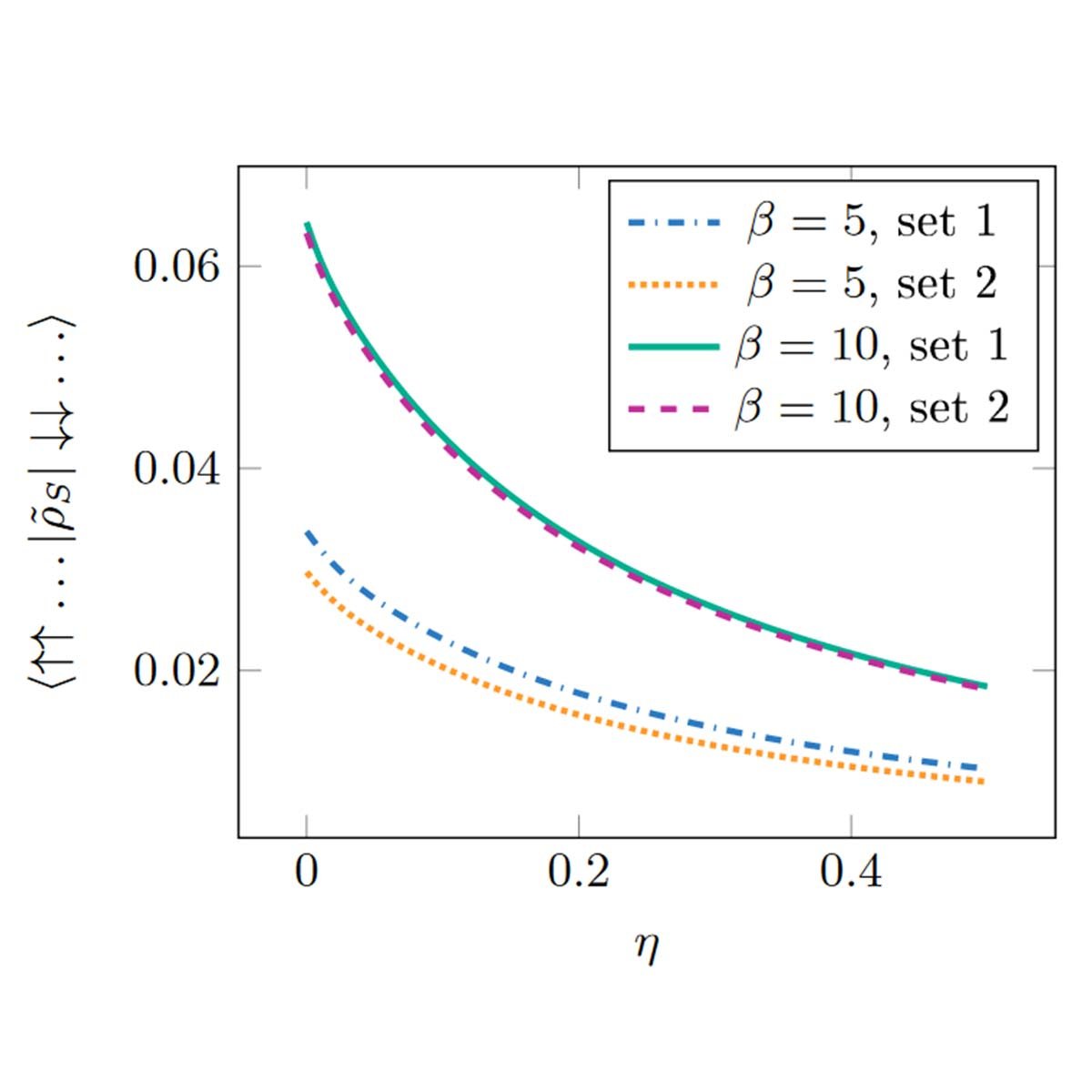
We study a system coupled to external degrees of freedom, called bath, where we assume that the total system, consisting of system and bath is in equilibrium. An expansion in the coupling between system and bath leads to a general form of the reduced density matrix of the system as a function of the bath selfenergy. The coupling to the bath results in a renormalization of the energies of the system and in a change of the eigenbasis. This theory is applicable to quantum emulators in thermal equilibrium. Undesired external degrees of freedom can affect their reliability. We study the influence of bosonic degrees of freedom on the state of a six qubit system.